

通信ケーブル用LSZHコンパウンドの防火適合性とハロゲンフリー検証
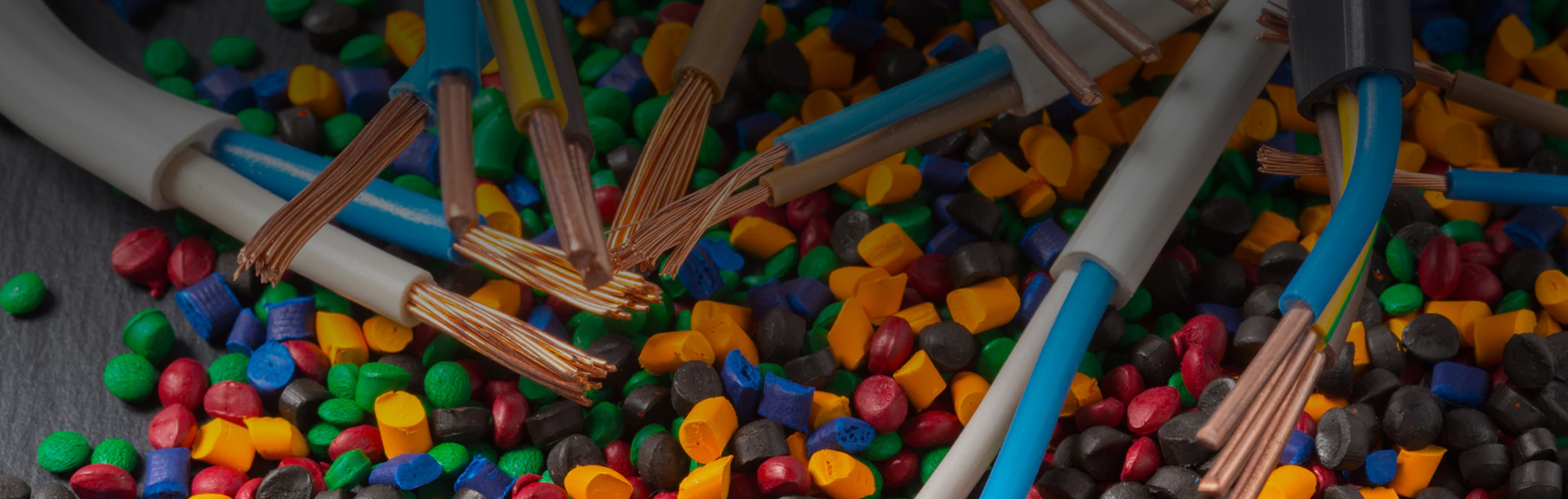
インフラストラクチャおよび通信ネットワークの世界市場では、** の仕様が求められます。 通信ケーブル用LSZHコンパウンド ** は、厳しい火災安全規制に基づく交渉の余地のない要件です。低煙ゼロハロゲン材料の使用により、燃焼中の濃煙や腐食性の有毒ガスの放出が防止され、人命と敏感な電子機器が保護されます。ケーブル メーカーにとって、コンプライアンスを検証するには、厳格な **ハロゲンフリー化合物試験**手順と、特定の **LSZH 低煙密度**要件の順守が必要です。 Hangzhou Meilin New Materials Technology Co., Ltd. は、30 年以上の経験と 3 つの工場にわたる 31 の高度な生産ラインを備え、高品質の LSZH コンパウンドの製造を専門とし、国内外の顧客にコンプライアンスと優れたパフォーマンスを保証します。
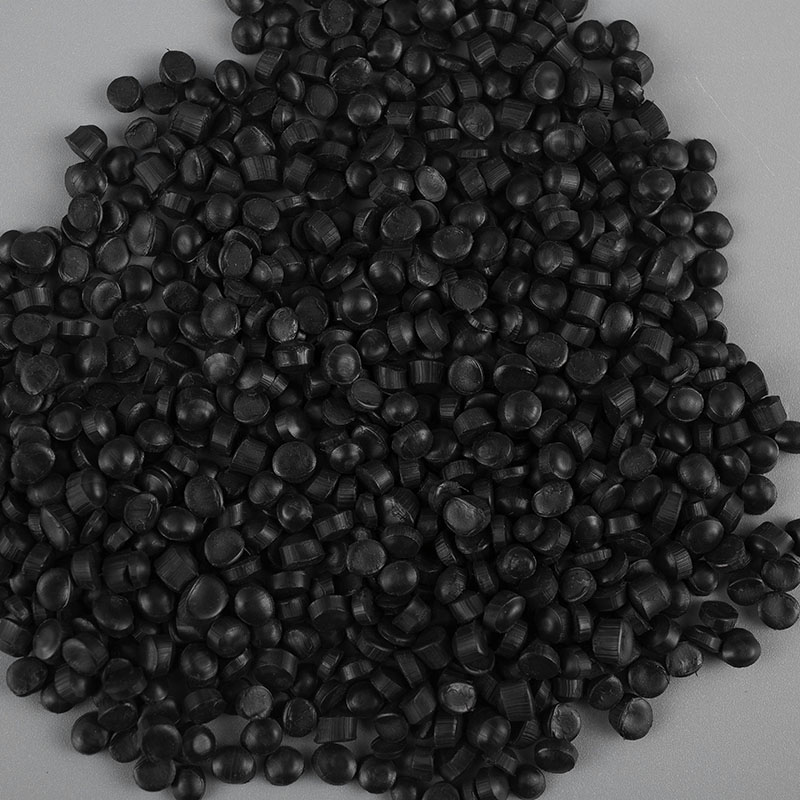
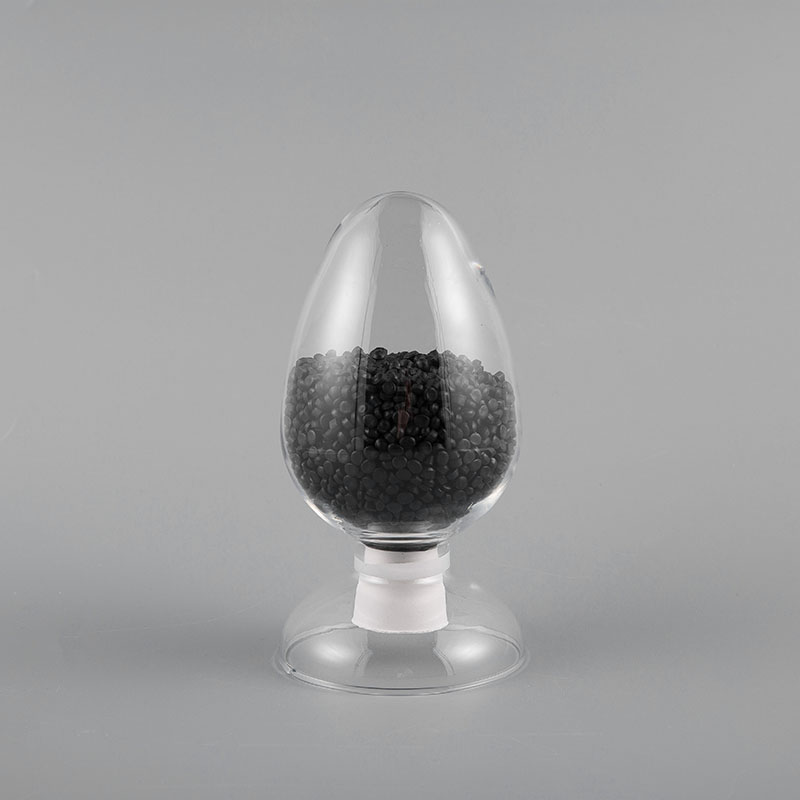
ML-TH9002B2 熱可塑性 LSZH 難燃性 B2ca グレードのシース材料
ハロゲンフリーの検証と毒性
LSZH の中心原理は、腐食性の高い燃焼生成物の除去です。
実行中 ハロゲンフリー化合物試験 手順
To confirm that a product qualifies as halogen-free, rigorous **Halogen-free compound testing** procedures must be conducted, primarily the IEC 60754 series. This involves burning the material under controlled conditions and measuring the acidity (pH) and conductivity of the resulting combustion gases. The standard mandates that the pH value must be above $4.3$ (indicating low acidity) and the conductivity must be below $10 \mu\text{S}/\text{mm (indicating minimal ionized corrosive content). This ensures the material does not pose a threat to people or cause corrosion damage to nearby infrastructure.
Comparing Halogenated vs. Halogen-Free Compounds
The chemical difference between traditional and modern compounds is vital. Standard materials like PVC rely on chlorine (a halogen) to achieve fire retardancy, but combustion releases highly toxic and corrosive Hydrogen Chloride (HCl) gas. **LSZH Compounds For Communication Cables**, conversely, achieve flame retardancy through large loadings of metal hydroxides (e.g., magnesium hydroxide). When heated, these hydroxides decompose endothermically, releasing water vapor to cool the flame and forming a protective char layer, effectively eliminating acid gas release.
Comparison: Compound Type vs. Acid Gas Emission and Environmental Impact:
| Compound Type | Halogen Content | Acid Gas Release During Fire (Corrosivity) |
|---|---|---|
| PVC (Halogenated) | High | High (Releases HCl) |
| 通信ケーブル用LSZHコンパウンド | Zero | Negligible (Neutralized by metal hydroxides) |
Flammability and Smoke Density Control
Beyond acid gas, controlling the spread of fire and maintaining visibility are crucial safety factors.
Interpreting Flammability testing standards for cable jackets
Verification of flame spread resistance relies on strict **Flammability testing standards** such as IEC 60332. The single cable vertical flame test (IEC 60332-1-2) confirms that the jacket material is self-extinguishing and will not propagate the flame. For large installations, more demanding bundle tests (IEC 60332-3) are required. B2B buyers should also review the Limiting Oxygen Index (LOI) of the compound; a higher LOI value (typically $> 30\%$) indicates a stronger resistance to ignition and combustion.
Meeting stringent LSZH low smoke density requirements
The primary threat in enclosed fires is smoke inhalation and loss of visibility, which hinders evacuation. The IEC 61034 standard dictates how **LSZH Compounds For Communication Cables** must perform regarding smoke emission. The test measures the percentage of light lost over a specified path length when the cable is combusted. Achieving **LSZH low smoke density** requirements means the material must maintain a high percentage of light transmittance (typically $> 60\%$) throughout the test, a key performance metric for **LSZH materials for data cable** jacketing used in tunnels and subways.
Manufacturing Considerations and Performance
Compound processability is tied directly to manufacturing efficiency and final product quality.
Processing characteristics of LSZH for high-speed extrusion
The **Processing characteristics of LSZH** are inherently complex due to the heavy loading of non-polymeric mineral fillers required for fire retardancy. This high filler content affects the compound's viscosity and melt strength. Manufacturers must select compounds specifically optimized for high-speed extrusion lines. Poor **Processing characteristics of LSZH** can lead to extruder surging, material degradation, and surface roughness on the final cable jacket, requiring specialized extrusion equipment and precise temperature control.
Applying LSZH materials for data cable jacketing
When using **LSZH materials for data cable** jacketing (e.g., Cat 6, Cat 7), the compound must meet two sets of demanding criteria: fire safety *and* electrical performance. **LSZH Compounds For Communication Cables** used for high-frequency data transmission must have a stable, low relative permittivity and low dissipation factor to minimize signal attenuation and maintain the necessary bandwidth capacity. Compromising on the electrical properties of the **LSZH materials for data cable** jacketing for the sake of fire performance is unacceptable in modern networks.
Conclusion
Sourcing **LSZH Compounds For Communication Cables** is a critical engineering decision that balances fire safety compliance with manufacturing efficiency. Success depends on selecting materials that have passed stringent **Halogen-free compound testing** procedures, meet demanding **LSZH low smoke density** requirements, and exhibit excellent **Processing characteristics of LSZH**. Hangzhou Meilin New Material Technology Co., Ltd. leverages its technological expertise, advanced production lines, and commitment to R&D to provide high-quality **LSZH materials for data cable** jacketing and other specialized compounds that consistently meet global **Flammability testing standards** and performance expectations.
Frequently Asked Questions (FAQ)
- What is the key chemical mechanism that enables **LSZH Compounds For Communication Cables** to reduce smoke? **LSZH Compounds For Communication Cables** often contain high loadings of inorganic metal hydroxides (like Al(OH)}_3$ or Mg(OH)}_2$). When exposed to heat, these compounds release water vapor and form a dense char layer, which acts as a barrier to suppress smoke formation.
- **ハロゲンフリー化合物試験**手順 (IEC 60754-2) における pH の一般的な許容範囲はどれくらいですか? IEC 60754-2 規格では、準拠し非腐食性であるとみなされるためには、燃焼ガスからの水性抽出物の pH が 4.3 ドルを超えている必要があります。
- Why is the **LSZHの処理特性** often more difficult than PVC? **通信ケーブル用LSZHコンパウンド** contain significantly higher volumes of inorganic solid fillers (up to $60\%$) required for fire suppression. This high filler content increases the compound's viscosity, making it more difficult to process smoothly and rapidly on high-speed extrusion lines compared to unfilled or lightly filled PVC.
- How does the choice of **データケーブル用LSZH素材** ジャケット affect Cat 6A performance? 高-speed data cables require jackets with a low, stable Dielectric Constant ($K$) to minimize signal loss (attenuation). If the **LSZH materials for data cable** jacketing formulation has a high $K$ value or inconsistent mixing, it can degrade the cable's impedance and fail to meet Cat 6A transmission 要件.
- Is passing the IEC 60332-1 test sufficient for a **LSZH 低煙濃度** claim? いいえ、IEC 60332-1 (垂直方向の火炎伝播) に合格することでのみ、難燃性が確認されます。 **LSZH 低煙密度**の主張は、燃焼中の光透過率を測定する IEC 61034 規格を使用して別途検証する必要があります。
-
 追加:
追加:浙江省杭州市臨安区興裕街259号
-
 TEL/FAX:
+86-0571-63763088
-
 電子メール:
 -

-
お問い合わせ クリエイティブなプロジェクトですか?生産的な話をしましょう。
著作権© 杭州美林新材料技術有限公司 無断転載を禁じます。 カスタム電線およびケーブル材料メーカー
